

Top Prepaid Card Casinos in Canada 2026: Deposits and Cashouts
Compare prepaid card casinos in Canada: Paysafecard, Flexepin, Neosurf and prepaid Mastercard deposits, plus fees and cashout limits.
 By Louren HisterUpdated 4 November 2026
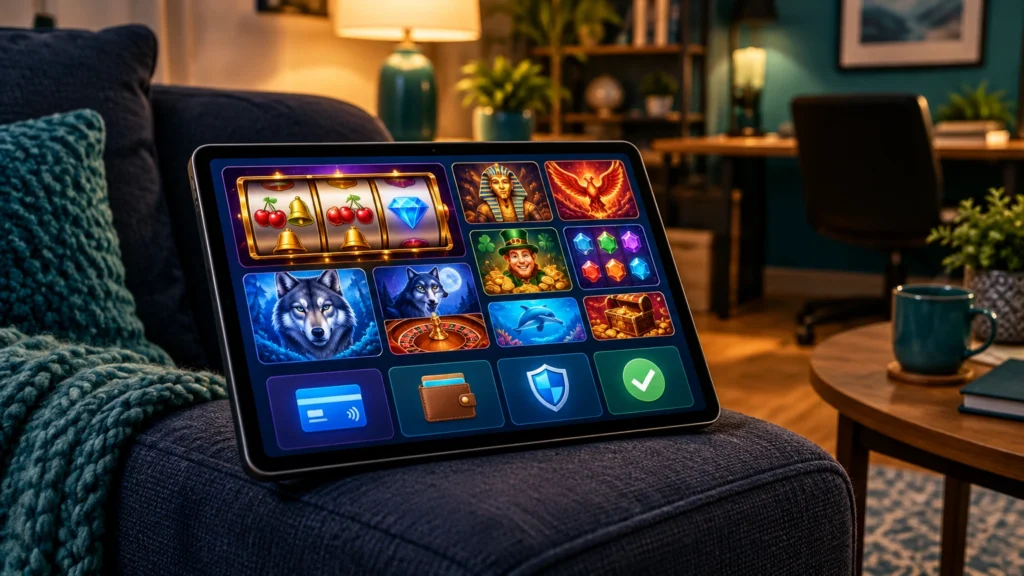
Prepaid card casinos in Canada are online casino platforms that take a prepaid Mastercard, Visa or PIN voucher as a way to fund your account. Paysafecard, Flexepin, Neosurf and CashtoCode top up a casino balance right away, and so does a non-reloadable prepaid Mastercard issued by Peoples Trust (the Joker card). What none of them can do is receive a withdrawal — and that one limitation drives the entire process.

































The card itself sets your true deposit ceiling. A non-reloadable prepaid Mastercard issued by Peoples Trust (Joker card) has a maximum balance of C$500, a Paysafecard payment stops at C$400, and CashtoCode’s Canadian per-payment limit is not verified. On the confirmed purchase fee, a non-reloadable prepaid Mastercard issued by Peoples Trust (Joker card) costs C$7.95; Vanilla’s activation fee is not verified. Either way, you pay in the store rather than at the cashier.
Winnings must go to a separate payout method — in Canada that usually means Interac e-Transfer, a bank transfer or an e-wallet. Whether a voucher counts toward a bonus is a question only the operator’s own bonus page can settle, so check it at online casinos in Canada before you fund your account. Prepaid deposits work the same way on mobile, and that fixed balance doubles as a hard spending cap.
On this page11 sections
- Top Prepaid Card Casinos in Canada
- Bonuses With a Prepaid Deposit
- The Types of Prepaid Cards at Online Casinos
- Fees, Limits and Deposit Speed
- Mobile Deposits From a Phone
- Privacy and Verification
- Buying Prepaid Cards in Canada
- Depositing at the Casino Cashier
- Why Withdrawals Need a Different Payout Method
- Prepaid Card Online Casinos vs. Top Interac e-Transfer Sites
- Frequently Asked Questions About Prepaid Casino Deposits
Top Prepaid Card Casinos in Canada
Only a small group of licensed operators, not dozens of brands, makes up the Canadian online casinos that take prepaid payments. Paysafecard sits in the cashier at both JackpotCity and Spin Casino, while Zodiac Casino advertises a minimum deposit of roughly C$1 spread across 14 listed payment methods.
Casino |
Licence |
Prepaid options |
Minimum deposit |
Best for |
|---|---|---|---|---|
AGCO and iGaming Ontario; AGLC in Alberta; Kahnawake and Malta offshore |
Paysafecard |
C$10 |
registration in both open provinces |
|
Kahnawake and Malta, same group as JackpotCity |
Paysafecard, Flexepin |
C$10 |
two voucher brands in one cashier |
|
Zodiac Casino |
Kahnawake permit #00972 |
Flexepin, Paysafecard, Neosurf |
C$1 |
testing a site with a single small voucher |
Ruby Fortune |
Kahnawake permit #00892 and Malta |
voucher methods |
C$10 |
a game catalogue audited by eCOGRA |
Captain Cooks |
Casino Rewards group; Alberta registrant |
voucher methods |
C$1 – C$10 |
small voucher deposits plus an Alberta registration |
AGLC in Alberta; offshore elsewhere |
voucher deposits |
C$10 |
Alberta’s newly opened private market |
|
PowerPlay |
AGCO and iGaming Ontario; Alberta registrant |
voucher deposits |
C$10 |
an account inside Ontario’s register |
Curaçao licence OGL/2023/176/0095 |
prepaid card deposits |
C$10 |
provinces without a private market |
What sets these names apart is licensing rather than marketing. JackpotCity carries an AGCO registration via iGaming Ontario plus a second one in Alberta, whereas Zodiac Casino and Ruby Fortune operate under Kahnawake Gaming Commission permits.
Alberta’s private market went live on July 13, 2026, which explains why Captain Cooks and Casino Days now hold a provincial registration next to an offshore licence. The game libraries at JackpotCity, Spin Casino and Ruby Fortune are built on Games Global software and display eCOGRA audit seals.
Where Prepaid Cards May Be Refused
Two familiar names sit outside this list, though not for the reason usually given. We could not verify whether OLG, Ontario’s provincial operator, or bet365 Ontario accept prepaid cards at all, so neither is ranked here. In Ontario, Standard 5.69 requires every deposit to be authorized by a financial services provider, which shapes how operators handle the payment options they offer.
Your own situation matters more than any ranking. Zodiac Casino suits a first deposit of a few dollars from one voucher, while JackpotCity and PowerPlay suit players who prefer a provincially registered account with recourse close to home. Wild Fortune caters to players in provinces with no regulated market, and its Curaçao licence carries no Canadian oversight.
In Canada, regulated access and prepaid access seldom line up. An account registered in Ontario or Alberta comes with provincial recourse, yet most prepaid options live on the offshore side of the market. If you want both, open the cashier and confirm the method before you buy a card, since each operator sets its own acceptance rules.
Bonuses With a Prepaid Deposit
Rules on prepaid deposits differ from one operator to the next, so read the operator’s own bonus page before you count on any offer. Payment-method restrictions do exist, though they tend to affect reload promotions and loyalty cashback more than a first deposit. What an offer is genuinely worth comes down to the playthrough attached to it. Welcome packages in Canada often require 35× wagering, sitting inside an industry range of 20× to 50×.
- At 35×, a C$100 bonus translates into C$3,500 of wagering before any withdrawal.
- Slot games generally contribute the full 100% to that requirement.
- Tables and live dealer games usually add 10% to 20%, and at times count for nothing.
A small voucher may also fall short of the minimum deposit. Where a site needs C$10 or C$20 before an offer activates, a lesser payment will not set it off, and Paysafecard’s C$400 ceiling limits how much of a big match you can claim in a single payment.
Note: AGCO Standard 2.05 and Alberta’s revised rules ban public advertising of bonuses and inducements outside an operator’s own site, so the terms that apply today live on the casino’s bonus page and are worth reading before you deposit.
The Types of Prepaid Cards at Online Casinos
At real-money casinos, prepaid products are bought for a set value and sit on no bank account or credit line. Canadian cashiers file four of them under one label, yet each behaves differently the moment a deposit begins.
Non-reloadable gift cards
A non-reloadable prepaid Mastercard issued by Peoples Trust (the Joker card) tops out at a C$500 balance. Under its cardholder agreement, the card works with online and phone merchants only and gives no access to cash.
PIN vouchers
Paysafecard offers 16-digit codes in Canada worth C$10, 30, 50, 100, 150 and 250, while Flexepin spans C$20 to C$500. A single code covers one payment, although several codes may be combined for one deposit.
Cash-at-store barcodes
CashtoCode creates a one-time barcode in the cashier that the player pays in cash at a partner shop. Funds land in the casino account immediately after payment; CashtoCode’s Canadian per-payment limit is not verified.
Reloadable prepaid cards
A registered card held in the player’s own name can be topped up and, unlike a gift card, is technically capable of receiving a payout. Whether a given casino permits that is a separate matter.
Reloadability is what counts at the cashier. A gift card gets spent once and leaves an awkward remainder, whereas a reloadable card acts more like a debit card with no bank account attached. Vouchers fall in between: one code, one payment.
Fees, Limits and Deposit Speed
From the cashier’s side, prepaid deposits appear free, yet the money leaves your pocket at the shop. Operators levy no charge for handling a card or voucher payment, which means every cost lands at the till — purchase and convenience fees included.
Method |
Cost to the player |
Maximum per payment |
Payout possible |
Speed |
|---|---|---|---|---|
Non-reloadable prepaid Mastercard (Peoples Trust/Joker) |
C$7.95 purchase fee; 2.5% FX fee |
C$500 max balance |
no |
instant deposit |
Paysafecard |
nothing at purchase; C$2.50 monthly — one official page says from the 19th month, another says from the second month |
C$400 per transaction |
no |
instant deposit |
Flexepin |
convenience fee C$1.95–C$15.95 |
C$500 per voucher |
no |
instant deposit |
CashtoCode |
none stated by the provider |
Canadian per-payment limit not verified |
no |
instant deposit |
Interac e-Transfer |
usually nothing |
bank and operator limits |
yes |
instant deposit; payout 1–24 h in Ontario |
What a C$100 Deposit Actually Costs
A C$100 load on a non-reloadable prepaid Mastercard issued by Peoples Trust (Joker card) costs C$107.95, because the purchase fee is C$7.95. Loading the same C$100 through Paysafecard adds nothing at the till, and Interac e-Transfer is free as well.
Time itself carries a cost. Funds placed on a fresh card may sit unusable for as long as 24 hours, so an evening deposit can fail on timing even when the money is there. Neosurf charges a 2% exchange fee plus €3 a month once a balance has been dormant for three months, quietly shrinking whatever you left behind.
The card sets the real ceiling on a deposit. Casino minimums sit between C$1 and C$10 and their maximums reach four figures, but the confirmed voucher limits are C$400 per Paysafecard payment and C$500 per Flexepin voucher; CashtoCode’s limit is not verified. A registered my paysafecard account can hold up to C$3,500 in PINs and use up to C$10,000 per month. Funding a C$1,000 bankroll therefore takes three Paysafecard vouchers, or two C$500 prepaid Mastercard loads.
Whenever a casino does not bill in Canadian dollars, the Peoples Trust Joker card agreement applies a 2.5% foreign exchange service charge to the transaction. Offshore accounts held in another currency are the ones that trigger it.
Mobile Deposits From a Phone

Depositing from a phone gives you the same payment options as the desktop cashier, and prepaid cards have no dedicated mobile version. A card number, a voucher PIN or a CashtoCode barcode is entered into the identical fields, and the same caps and address verification apply.
Two things really are unique to a handset. A CashtoCode barcode can be displayed on your screen and scanned at the store till, so there is no need to print anything. Typing a voucher PIN on a phone keypad is also the leading cause of declined deposits, which makes pasting the code a safer bet than re-entering it by hand.
Inside a casino app, nothing differs either. Your balance, your bonus and the verification requirement behave just as they do in a mobile browser, and cashing out still calls for a different payment method.
Privacy and Verification
Prepaid deposits keep your banking details out of the operator’s hands, and that is the whole of the privacy benefit. Verification is required before any first withdrawal, so the account ends up documented even when the money that funded it arrived anonymously.
Canadian regulation makes that boundary concrete. AGCO Standard 5.70 says a payout must go to an account that legally belongs to the player, while FINTRAC obliges a casino to file a disbursement report for payments of C$10,000 or more, or several within 24 hours, within 15 calendar days.
On the Peoples Trust Joker card, a disputed transaction has to be reported in writing within 60 days, and the protection on offer is thinner than what a bank card provides. The Peoples Trust Joker card agreement confirms the card qualifies for no Zero Liability policy and that the funds carry no insurance from the Canada Deposit Insurance Corporation. Mastercard Zero Liability in Canada, meanwhile, excludes unregistered prepaid cards and gift cards. A bank-issued credit card stands on firmer ground: the Financial Consumer Agency of Canada caps a cardholder’s liability for unauthorized use at C$50.
Responsible Gambling
Spending discipline is the one benefit no bank card can replicate. A loaded card cannot be overdrawn and cannot be topped up mid-session, so whatever balance it holds becomes a firm ceiling on a bad evening. Ontario Standard 2.23 lets players set deposit and loss limits at registration or later, and Standard 2.24 provides that loosening a limit takes effect only after a 24-hour cooling-off.
ConnexOntario answers around the clock on 1-866-531-2600, and BetGuard covers all 84 regulated Ontario casino sites as of 1 September 2026. Provincial self-exclusion does not reach offshore casinos, so someone registered with BetGuard can still open an account on a Curaçao site. Anyone gambling beyond their plan should use those tools before buying the next card.
Buying Prepaid Cards in Canada
Vouchers and prepaid cards reach players through everyday Canadian retail channels. Paysafecard’s roster of official Canadian sellers includes Canada Post, alongside fuel and convenience names such as Esso, Canadian Tire Gas+, and Mobil. How widely Vanilla products sit on Canadian shelves is not verified.
Flexepin also sells online, through Payment Source and TopMeUp, where debit or Interac e-Transfer covers the purchase; several thousand retail outlets across Canada stock the vouchers too. Depending on the voucher’s value and where you buy it, the convenience fee falls between C$1.95 and C$15.95. CashtoCode’s Canadian outlet count is not verified.
- Choose a value that fits the deposit you have in mind — neither a voucher nor a gift card can be topped up afterwards.
- Complete the purchase at the till and hold on to the receipt, since that is where the code or activation reference appears.
- Register a prepaid card using the same name and postal code that your casino account carries, so the address check goes through.
- Hold off on depositing with a freshly bought card, as the funds may not clear for up to 24 hours after purchase.
Buying two cards to cover one big deposit seldom gets around a limit. Split-tender rules differ by issuer and merchant, and a cashier may simply refuse, so an online casino cashier will typically accept one card’s amount at a time.
Depositing at the Casino Cashier
At most Canadian online gambling sites, prepaid deposits land in your balance instantly, and the process looks much like any ordinary card payment. The operator never sees more than the payment credential itself: a card number, a 16-digit voucher PIN, or a cash-at-store barcode.
- Launch the cashier and pick the prepaid card or voucher option, which is listed apart from debit and credit.
- Type in the card number and expiry date, paste your voucher PIN, or create the barcode for a payment made in store.
- Choose an amount that satisfies two ceilings: the casino minimum deposit and the funds still loaded on the card.
- Approve the payment and watch the casino balance refresh, which usually happens within seconds.
- Finish identity verification when the operator asks for it, since verification is mandatory ahead of a first withdrawal, no matter how you funded the account.
Rejected deposits tend to stem from the address check rather than from the balance. Canadian cashiers confirm the name and postal code tied to a card payment, so an unregistered prepaid card fails even when it is fully loaded. Some issuers refuse gambling outright: Scotiabank’s Visa Gift Card authorizes online gambling only on sites owned and operated by provincial or territorial governments, and declines every other online gambling transaction.
Prepaid payments also dodge the cash-advance headache that comes with credit cards. Betting and casino gambling merchants use MCC 7995, and Canadian banks commonly bill a credit card deposit as a cash-like transaction, with interest from day one plus a fee of 3–5%. Whether a prepaid card is permitted at such a merchant is the issuer’s choice. Because no credit line sits behind a prepaid card, that charge never applies.
Why Withdrawals Need a Different Payout Method
A single-use prepaid card can never accept winnings: nothing can be loaded back onto it, and its cardholder agreement bars cash access. Most players therefore nominate Interac e-Transfer, the route roughly 90% of Canadians use through more than 250 financial institutions.
Visa Direct can send payouts to Visa Debit cards and reloadable prepaid cards that qualify in Canada, while credit cards are left out. How fast the money lands depends on the card and the issuing bank — some arrive sooner than others, and others can take up to two business days. Mastercard runs a comparable gaming payout program, though its published timing is not something we can confirm.
What actually governs payout speed is verification, not the method you deposited with. Once identity checks are done, Ontario operators usually settle within 1 to 24 hours, while elsewhere seven business days is a normal outer limit. AGCO Standard 5.71 asks for payment “as soon as is practicable” without naming a number, so any guaranteed payout window is marketing rather than regulation.
The usual fix is to pair two methods. Deposit C$100 with Paysafecard, nominate Interac e-Transfer for withdrawals, complete verification once, and every later cash-out lands in that same bank account.
Standard 5.70 adds a second constraint: the withdrawal account has to be one the player legally holds. A gift card picked up from a store shelf exists in nobody’s name, which is the other reason payouts go elsewhere.
Prepaid Card Online Casinos vs. Top Interac e-Transfer Sites
What you are really weighing is control over spending against how easy it is to collect winnings. A prepaid card takes the privacy and fixed-budget prize, whereas Interac e-Transfer takes the prize for low cost, bigger deposits and getting your money out.
- Fit the product to your plan: one voucher for a single session, or pick a registered reloadable card when a payout to a card could ever matter.
- Settle on the payout method before you deposit, since winnings cannot land on the prepaid card itself.
- Factor the purchase fee into the deposit: C$7.95 on a C$100 prepaid Mastercard load is real money, while Interac e-Transfer costs nothing.
- Read the qualifying deposit terms of any offer, because a C$400 voucher ceiling may fall short of a large match.
- Let the loaded balance be your session budget, and wait until after a break before buying another card.
Anyone cashing out weekly gets little out of a prepaid card and pays the activation fee all over again. A player after a set weekly budget, and no bank details sitting on file, gets precisely what the product does best.
Frequently Asked Questions About Prepaid Casino Deposits
Can You Deposit at Prepaid Card Casinos in Canada With a Prepaid Mastercard?
Yes — at Canadian sites that accept prepaid cards, as long as the card is registered under the same name and postal code as the casino account. The card also has to cover the casino’s minimum deposit, which is typically around C$10.
Can Real Money Winnings Be Withdrawn to a Prepaid Card?
Only in part. A single-use gift card or a voucher cannot take a payout, because nothing can be loaded back onto it. A registered reloadable prepaid card may qualify for a Visa Direct or Mastercard gaming payout, though only where the operator offers card payouts in the first place. Most Canadian players collect their money through Interac e-Transfer instead.
Do Prepaid Deposits Qualify for Casino Bonuses?
At most online casinos open to Canadian players, yes — a voucher or card deposit unlocks the same welcome offer as a bank method. Where operators do apply exclusions, reload bonuses and cashback are the usual casualties. The qualifying minimum still applies, so a very small voucher may release nothing at all.
What Does a Prepaid Casino Deposit Cost?
Anywhere from nothing to roughly 6% of the amount, depending on which product you buy. A C$100 load on a non-reloadable prepaid Mastercard issued by Peoples Trust (Joker card) carries a C$7.95 purchase fee, Flexepin adds a convenience fee starting at C$1.95, and Paysafecard is free at the point of purchase. Casinos themselves charge no processing fee.
Are Prepaid Casino Deposits Anonymous?
Only partly. A deposit never exposes your bank account or credit line to the operator. Even so, identity documents are required before the first withdrawal, winnings are paid to an account held in the player’s own name, and disbursements of C$10,000 or more — or several within 24 hours — get reported to FINTRAC.